I’ve been exploring how AI can support my knitting process, and along the way, I’ve been reminded of the genuinely human process of hand-making anything. Bread, sweaters, quilts, or any other handmade items require the maker to use a variety of human senses. I see my effort unfold as each stitch slides along the needle. I hear the rhythmic click of my metal knitting needles. I feel the growing fabric’s inconsistencies, stiffness, and shape as it evolves.
Like a baker adding flour to wet dough, a skilled knitter knows what their work needs. We can make adjustments mid-process using our senses and our skills. We all have the mistakes that we remember from past projects, and hopefully, we learn to spot those issues before they happen again.
So, as I cast on the AI recommended number of stitches for my raglan top, I assumed that I would likely need to use my knitter’s wits to see how things were shaping up, particularly when it came to the techniques that AI recommended. But, at the same time, I assumed that ChatGPT would be pretty accurate in its calculations based on my gauge, so I got started without much more than the same general pre-reading that I would give a normal pattern.
Of course, a normal, human-created pattern (particularly a purchased pattern that has gone through proper testing) has many iterations to ensure a low error rate. In this instance, I was tester #1, I suppose. And if using AI for patterns, this would always be the case for any future pattern as well. But, since my goal was more to understand some knitting math and raglan construction than it was to use AI for pattern design, I considered this part of my knitting lesson and didn’t let it deter me.
The first problem became apparent to me immediately after casting on, while placing my raglan segment stitch markers. The count was off! Of course, I assumed that my initial count must have been the problem, but after multiple recounts, I was reminded of a valuable lesson: always check AI results for accuracy. Turns out, even with math.
But, the lesson didn’t stop there, the reason ChatGPT had the wrong stitch totals (a mistake that compounded) was because the dimensions I had asked for did not work with the raglan increase frequency that I selected when ChatGPT asked me. So, ChatGPT couldn’t get the math to work with what I asked for.

Don’t Forget: AI isn’t your knitting friend and won’t tell you that your idea won’t work.
The good news is that I still learned more about what I’m actually doing through the process of increases and decreases. As silly as it sounds, I wasn’t truly equating the shaping I was doing with the slope of the line, just as it looks on a chart. Now, I’m fully aware of why different patterns call for different raglan increase intervals, based on the final dimensions.
Furthermore, now I can think of it as a math problem between two points on a grid. Those points simply equate to points on my body, like my collarbone and underarm, so the idea of knitting without a pattern at all started to seem a little simpler!
Don’t Forget: The raglan inc/dec frequency is just the slope of a line, like in algebra class.
Suddenly, I started to just hold it up to my body as I went. I made some errors along the way, but I was proud of my new understanding of what I was doing through the repetitive motion of knitting. I used AI for some additional adjustments, like when I decided to make it short-sleeved for more use in my tropical climate’s short fall/winter. But, for the most part, after the lesson above became clear to me, I set down the instructions and just knit.
The Finished Raglan Tee
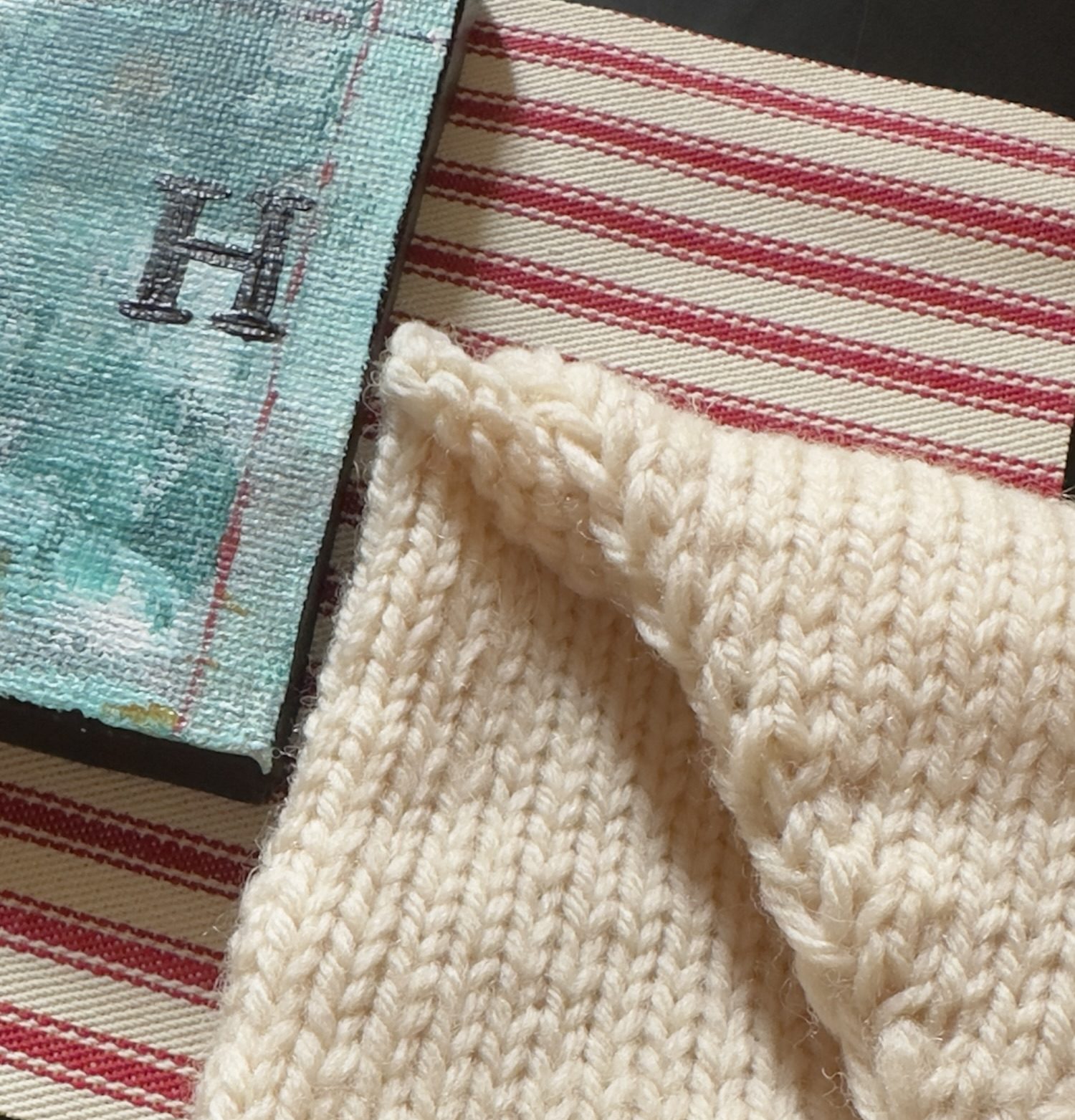
Yarn: Knitting for Olive Cotton Merino (Undyed) and Soft Silk Mohair (Cream)
AI Assistant: ChatGPT
Main Prompts:
- “Help me write a knitting pattern for a top-down raglan sweater with the dimensions below (insert dimensions). My gauge is (insert gauge). Provide row-by-row instructions that give the proper shaping using increases and decreases.”
- “I found an error in the instructions. (Describe error.) Please double-check your work throughout the pattern. Identify any additional inconsistencies in the math or chosen techniques. Provide instructions for adjusting the pattern.”
- “I have just finished the raglan increases (or insert other progress marker), but I’ve decided to change the pattern to be short-sleeved. Do I need to change the number of additional stitches that I cast on under the arm to accommodate this change? I want to keep a loose and boxy fit.”
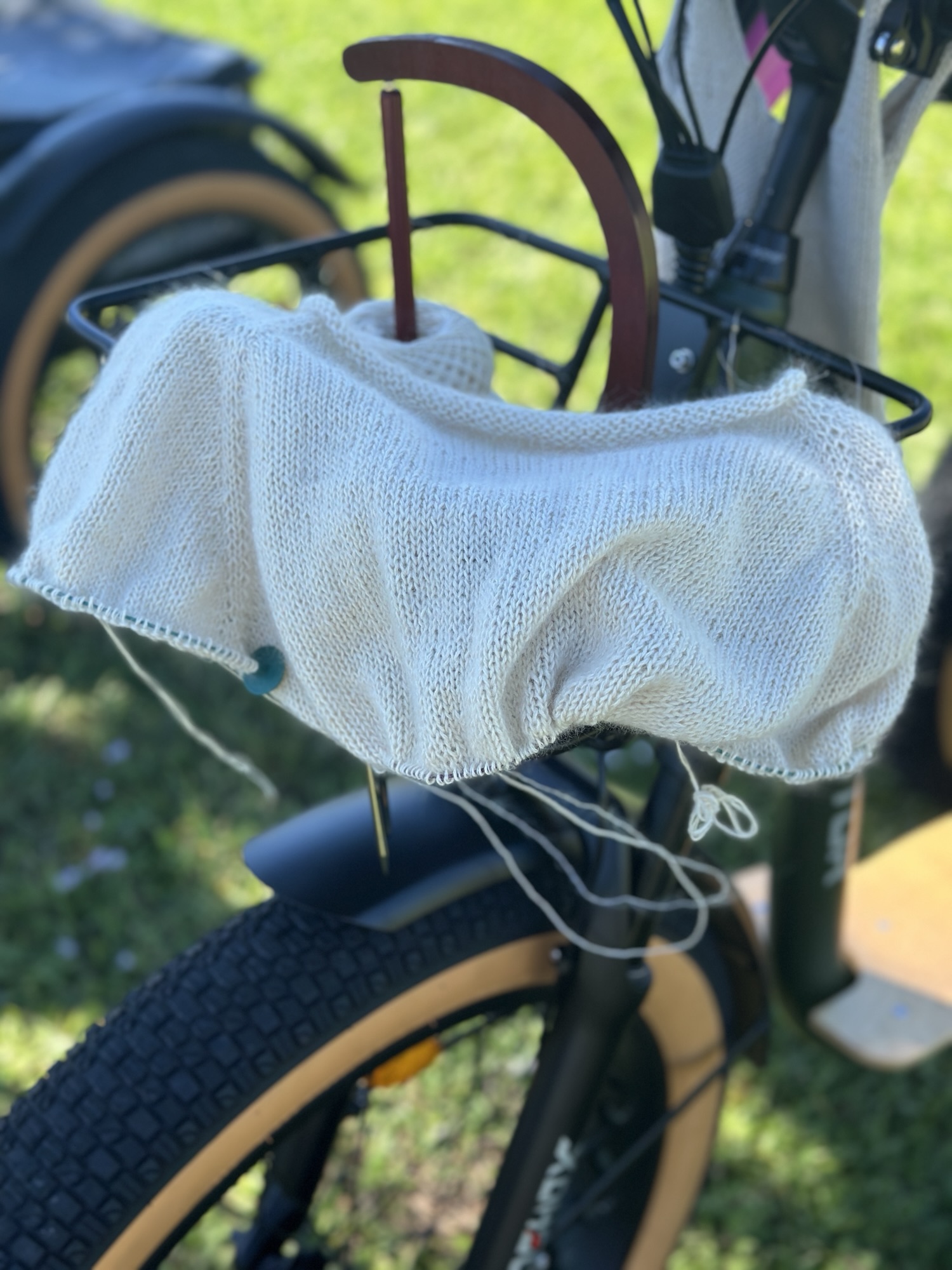


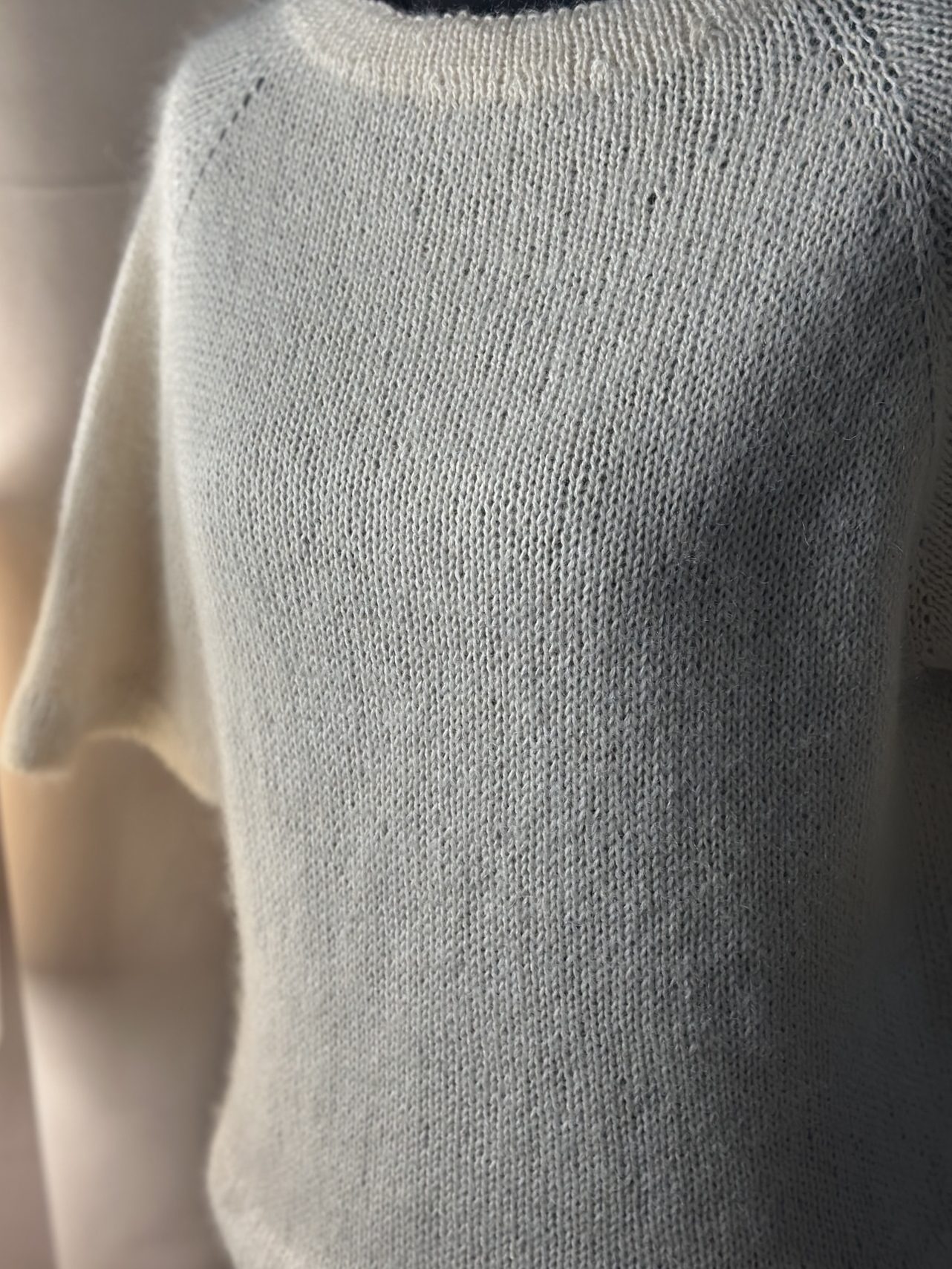
The feel of this project delighted me for twelve days, thanks to the luxurious yarn. I took it with me to as many places as I could, and I did disconnect in some significant ways, mainly as a result of newfound control over what I was doing and why. My initial goal of becoming more self-sufficient feels right on track.
I’ll continue to be cautious about my use of AI, but I know that there are ways to harness what it offers to a person with a DIY spirit who craves knowledge.
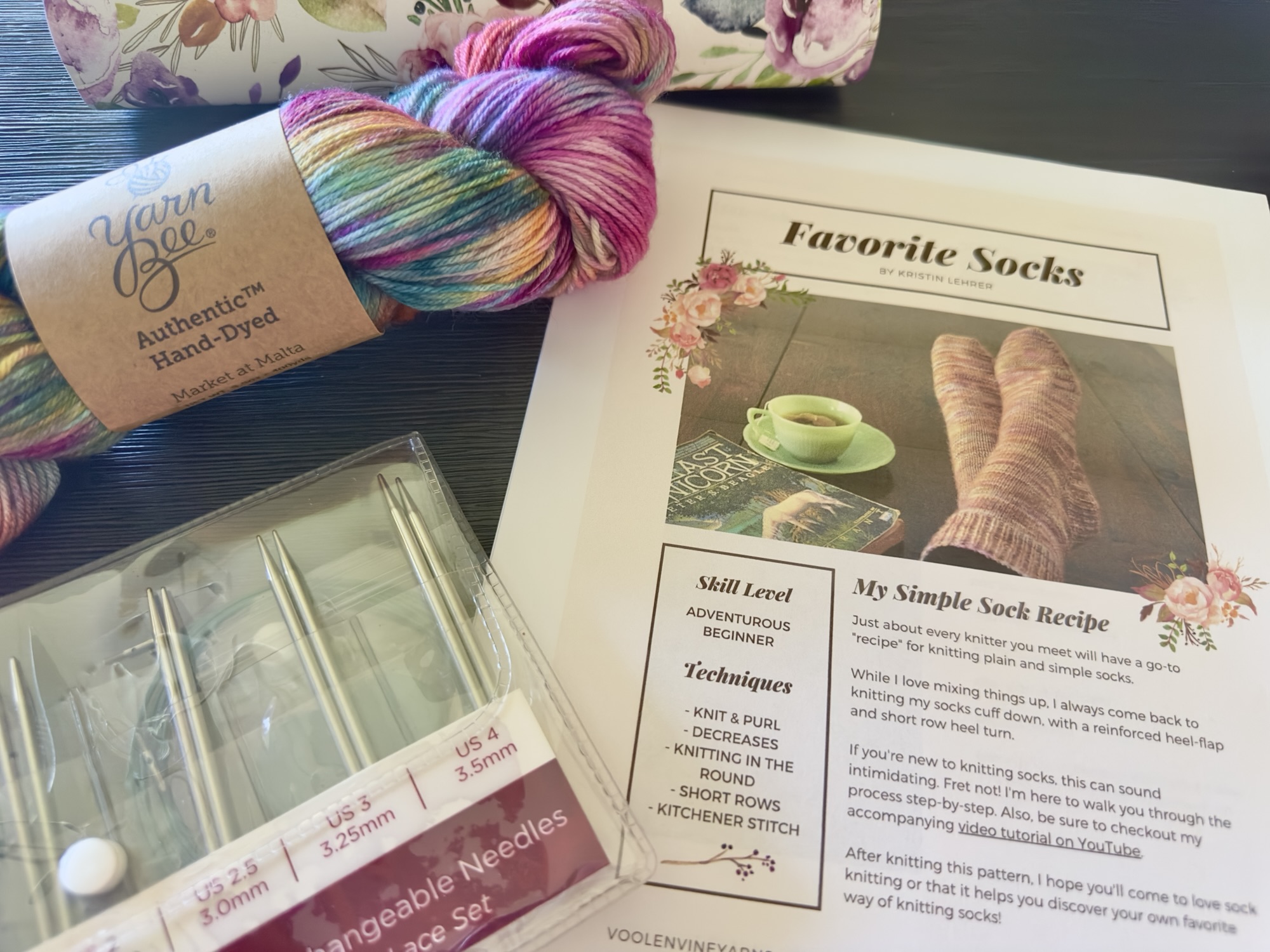
My next project is already on the needles, but this time, I am using a free pattern on Ravelry (Ravelry: Tip Top Tank). Until next time!




Leave a Reply to Tradition – Mantra KnittingCancel reply