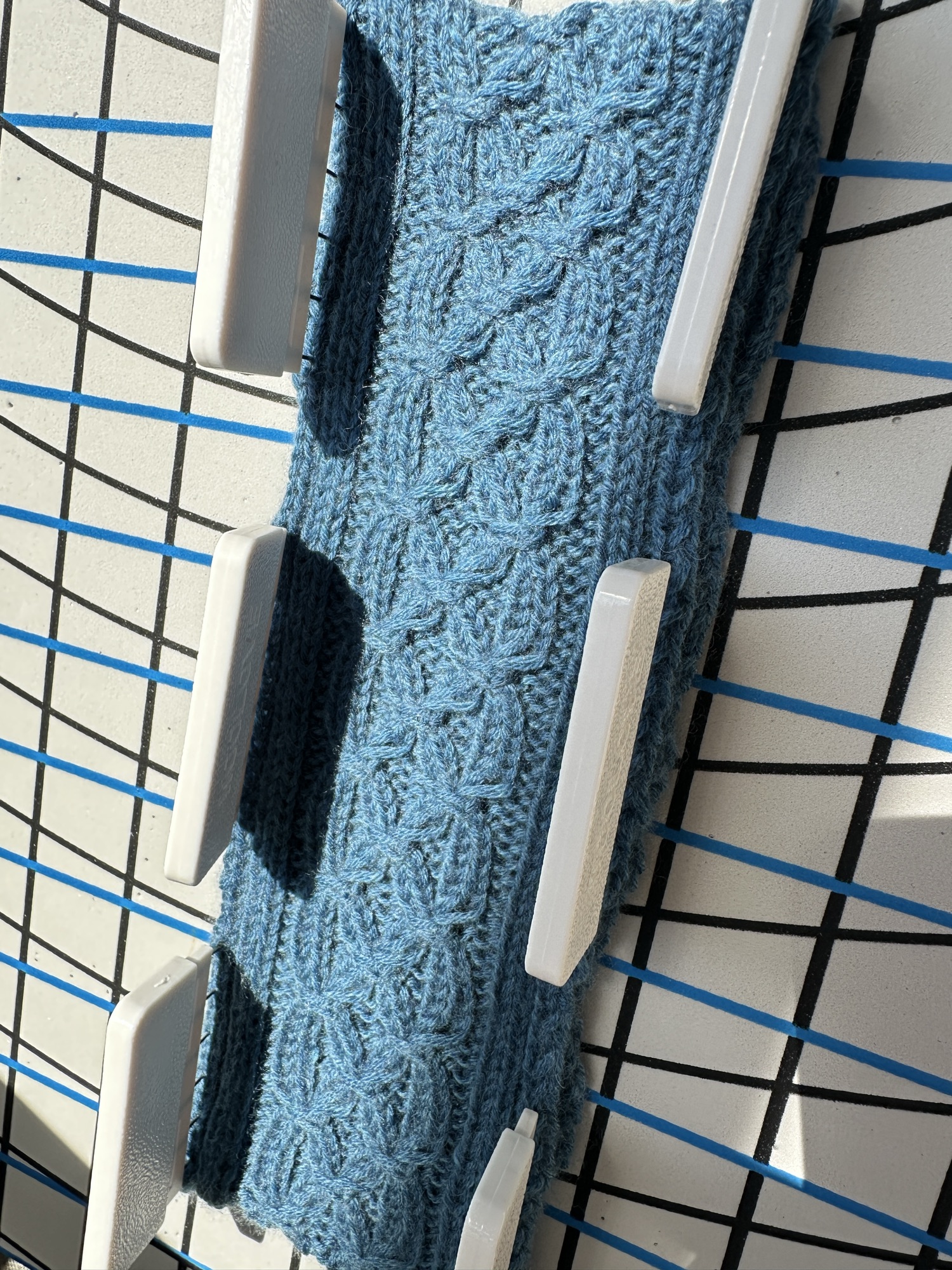
After reaching the finish line on a project, I have a series of tasks that I generally follow to prepare myself for the next one. As a project monogamous (most of the time), brainstorming for the next project is a critical task to keep my knitting practice in motion, but it isn’t the only one.
I also handle lots of little organizing tasks after finishing up. Taking apart my chosen interchangeable needles and storing the tips and cables in the proper place is a high priority (a lesson learned from waiting, and sadly, losing a tip somehow). Knitting has so many small tools and notions that I immediately seek to put things away; otherwise, you’d find stitch markers under my couch for sure! (Psst…you still might! 😉)
While these types of tasks are commonplace, my self-drafted smocking stitch headband sparked a new type of project afterwork- considering how I could have done it better.
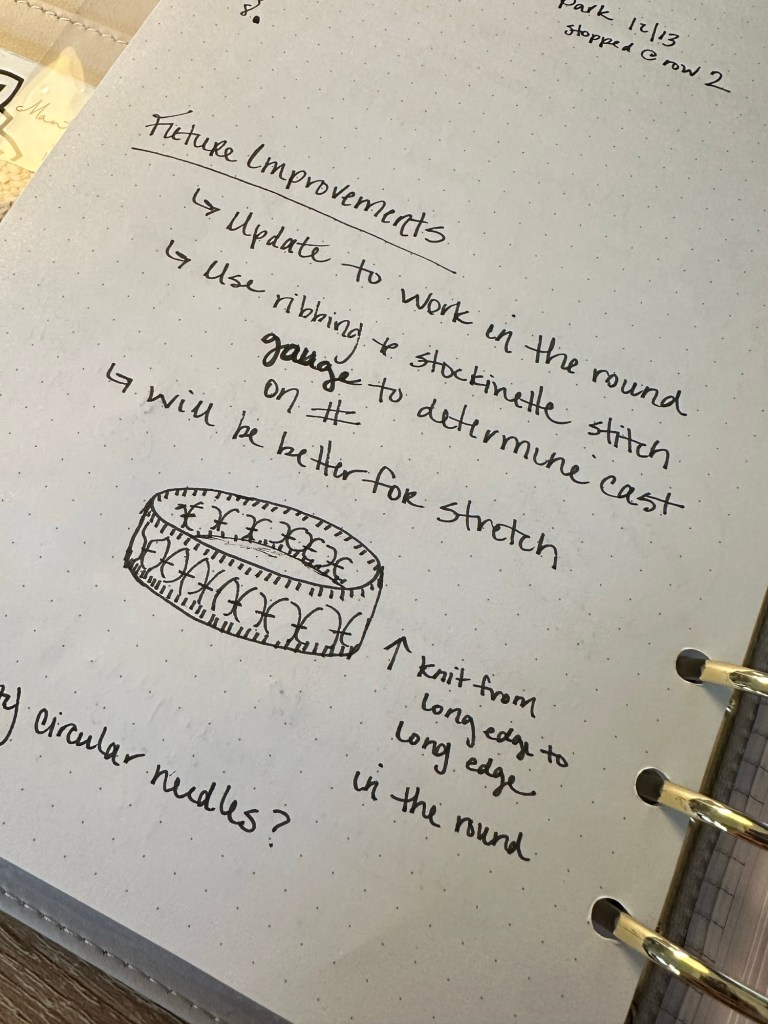
With mere inches remaining on this project, I realized the error in my original thinking on how it would come together. The realization was sparked by my annoyance at knitting a short back & forth project. Honestly, I encountered a similar feeling with my tip top tank’s bow straps, but that annoyance was gone by the time I planned out the headband.
I thought to myself, “why didn’t I make this in-the-round?”
And then…I really thought about what I was making, the functional fit on a human’s head, and the qualities of the stitch.
Not only would making this headband in-the-round have been more aligned with my preferred knitting style, but it would have been the better way all around!
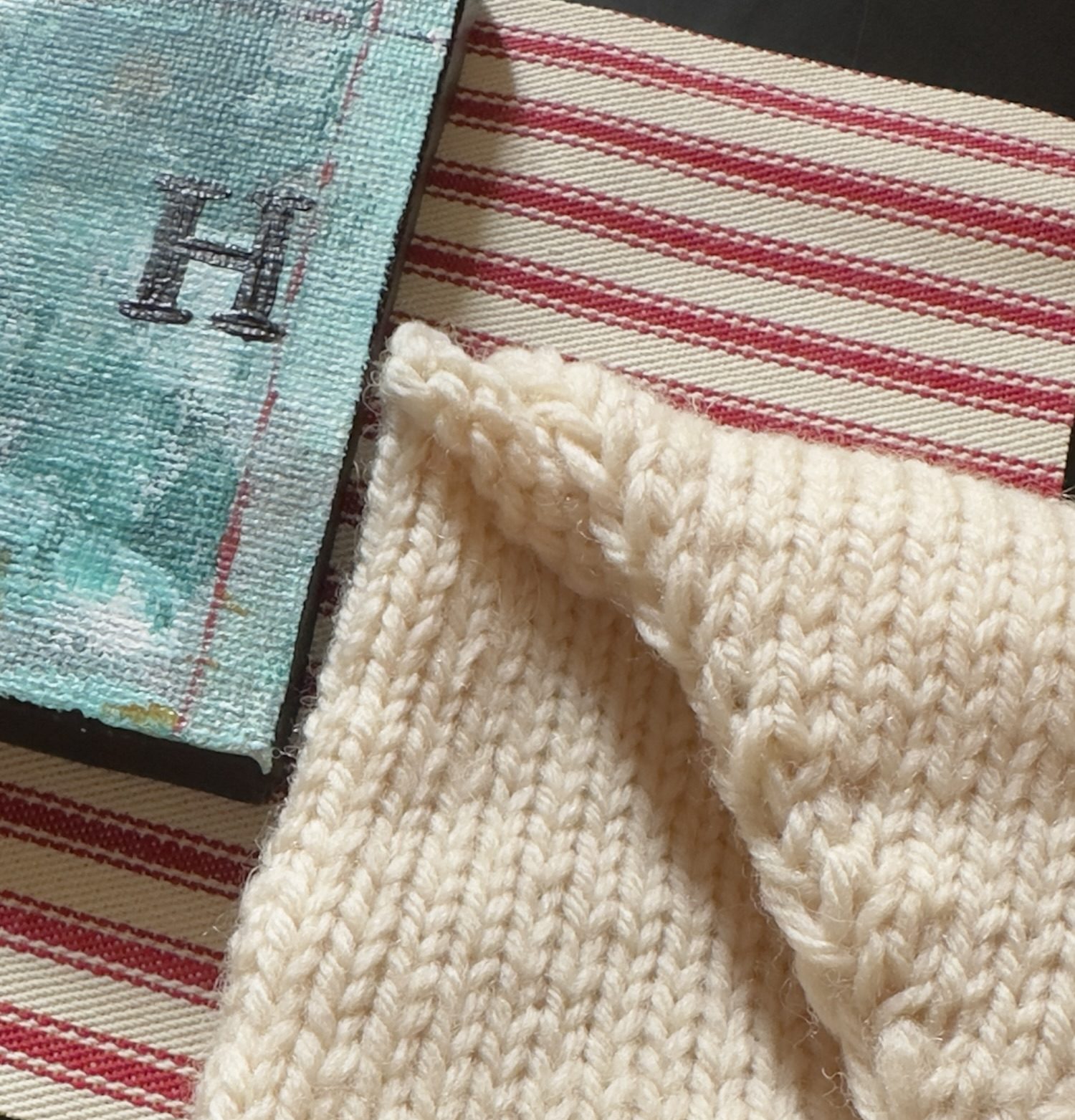
The smocking stitch creates a naturally elastic fabric by gathering stitches in an alternating pattern. It’s stretchy, but only horizontally. Ribbing, like the 2×2 border I chose, stretches in the same way. That’s what makes it perfect as the brim of a hat, stretching to the size of your head but staying snug so it doesn’t fall off or slip down to cover your eyes.
Final Rows at the Park
For both stitch patterns (smocking/ribbing), I should have worked with the stretch by knitting from long edge to long edge.
Additionally, I wanted to create a seamless headband, so I used a provisional cast-on with the intent to connect via kitchener stitch. Knitting in-the-round would have given me a seamless headband without this extra step! Hindsight is really 20-20, I guess!
These realizations came late, and I decided to finish the headband as it was, but if I ever make another, I will make it with these improvements.
Ultimately, my choices converted the smocking stitch into a faux cable of sorts. I don’t think my 8-year-old recipient will mind, and I’m still excited to give it to her.





Leave a Reply