This week, I ventured to a neighboring town to check out two local yarn shops. My hope was to 1) find premium yarn that is hard to get in my small town and 2) meet fellow knitting enthusiasts and see what community events each store had.
I was successful in achieving both of these goals! I chatted with others while browsing the great selection at both stores. Ultimately, I found yarn for three projects. Each one is a garment for myself as I strive to build a minimalist wardrobe with my handknits. (My current goal is 2 tees, 3 tanks, 1 sweater, and 1 cardigan. I have 2 tees and 1 tank so far.)
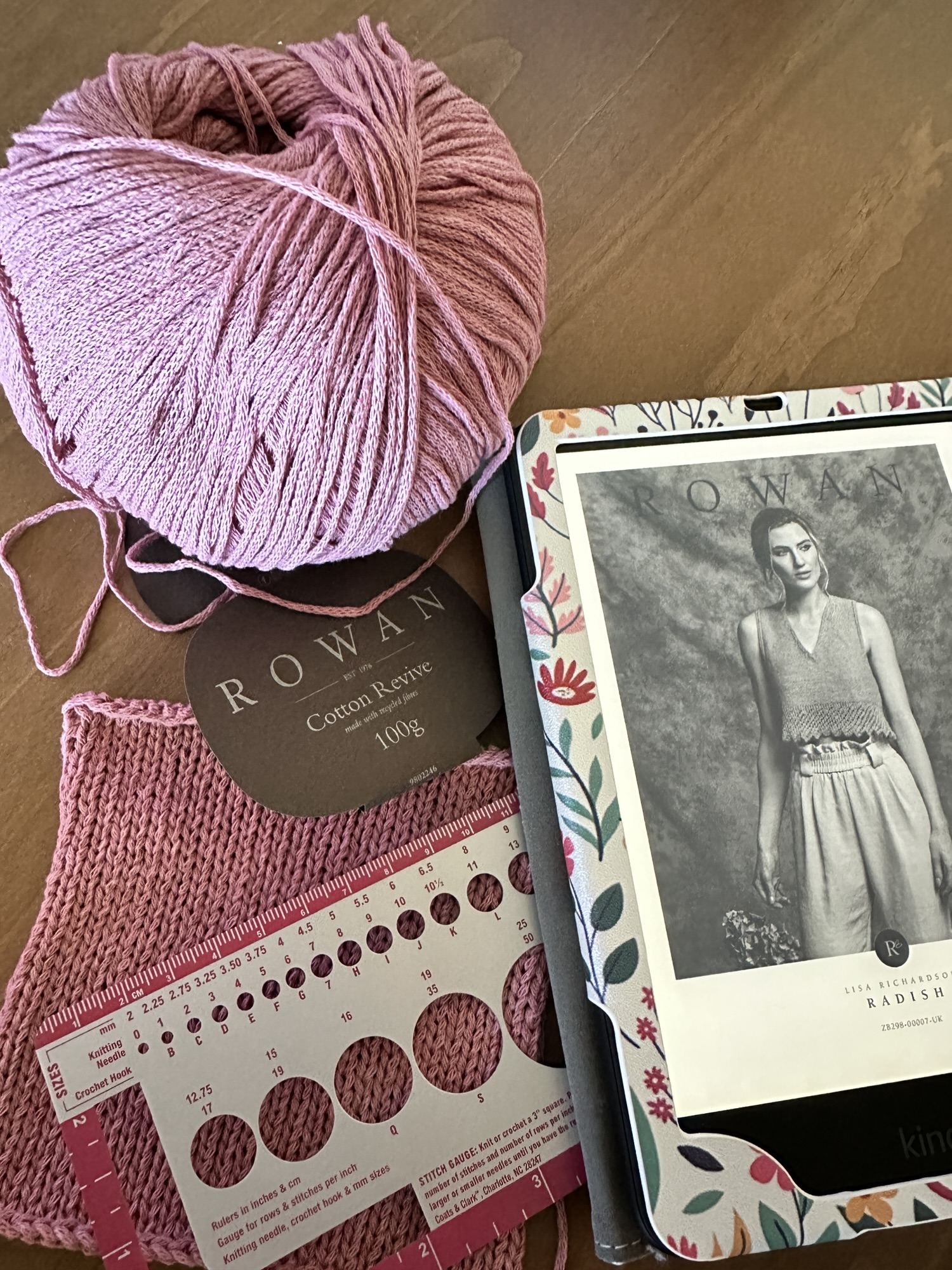
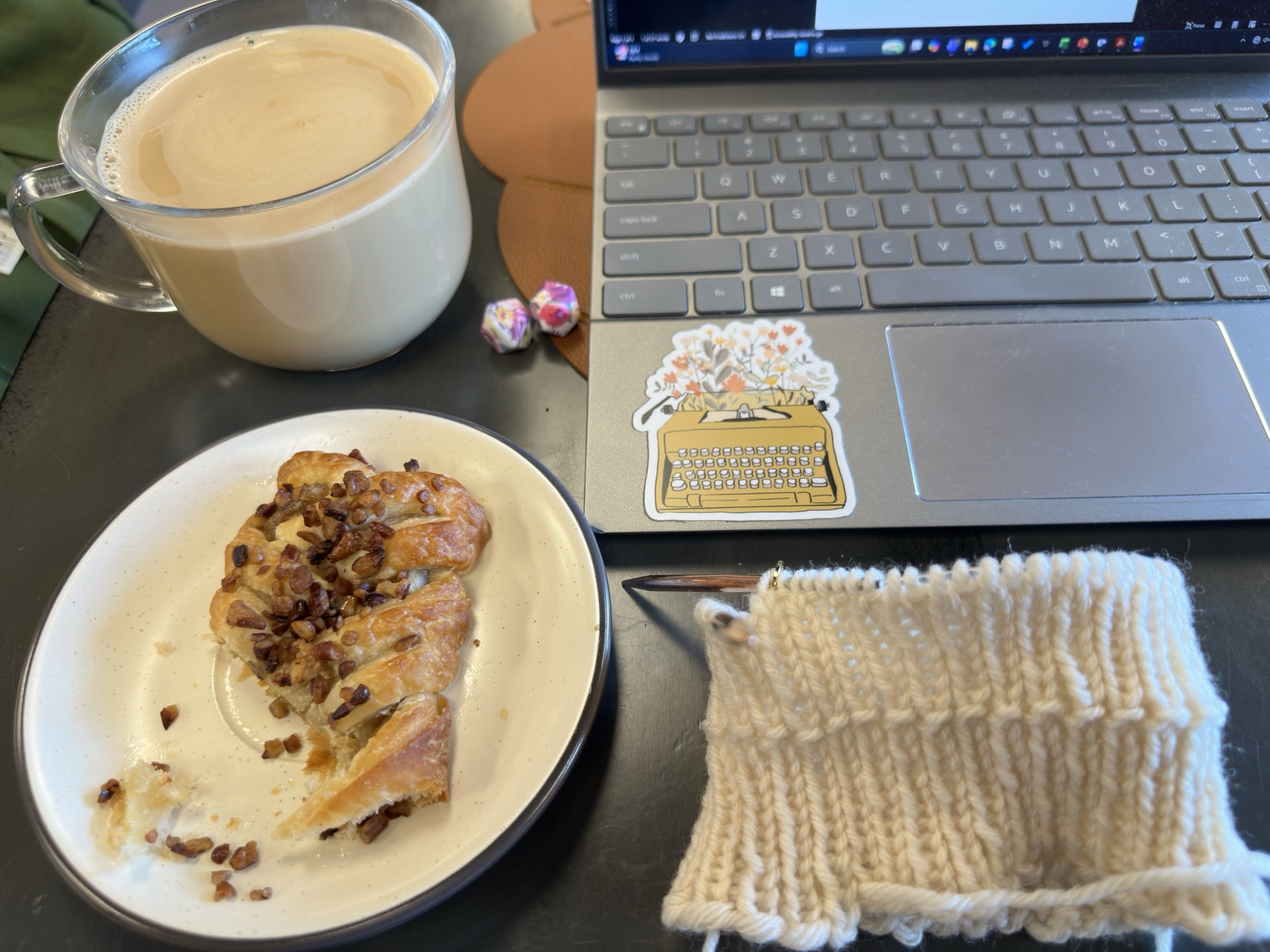
The first project to hit my needles is the Radish crop top from Rowan in Rowan Cotton Revive (Color: 003/Cherry Blossom). With complete enthusiasm, I set about knitting a gauge swatch on the recommended US 5 needles. And then…. a second one on US 6.
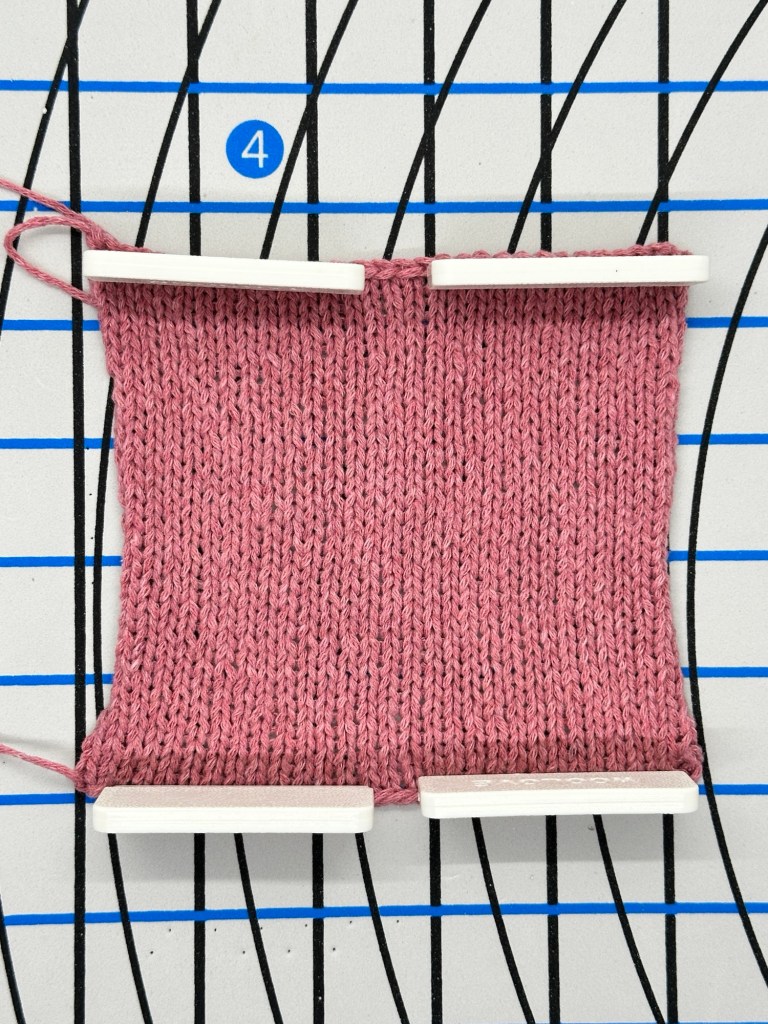
I was able to make stitch gauge but not row gauge, which for this sideways knit construction is pretty critical. I was just about to cast on a third gauge swatch when some of the pattern instructions caught my eye and thoroughly confused me!
In the armhole shaping, increases are described in a very confusing manner. I needed some support and to see if anyone had encountered the same problem, so off to Ravelry I went! Turns out, I was not alone in my confusion and many people struggled with the sizing. Most notably, people complained that the armhole was massive and created a large gap.
Thankfully, several folks also described their method to understanding the pattern. And since my row gauge would result in a slightly smaller garment than expected, I decided to keep my needle size and gamble with the gauge to see if I could get a better fit than the original gauge in the pattern seems to offer.
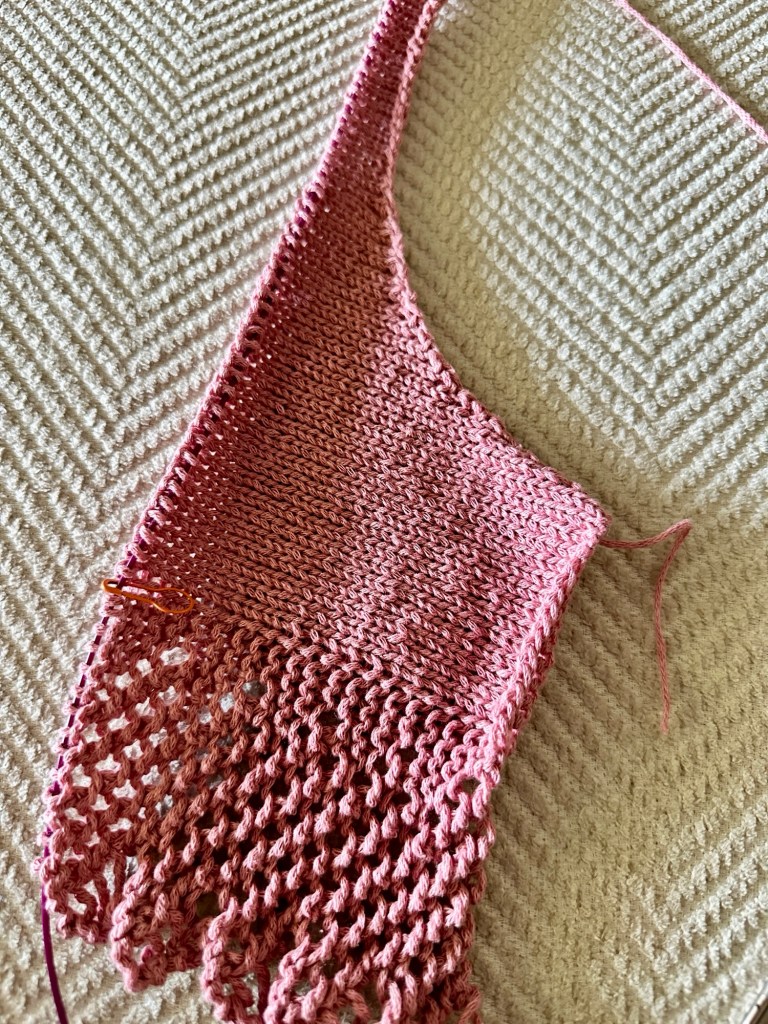
So far, I have persevered through the first set of increases with what appears to be a successful shape. I keep holding it to myself to see how big of an underarm gap there might be, and so far, I think we’re overcoming the sizing issue.
I try to heed the common advice of knitting a gauge swatch. But in this case, the result of the swatching process has been more educational in nature, and this project is a good reminder to do your research and pay attention to what’s happening on the needles. I love trusting a pattern and seeing how it all comes together, but this time, I am using a “trust but verify” strategy.
Is it a gamble? Absolutely! But thankfully, if it doesn’t work out, this can just become yarn again…no harm, no foul. Either way, I’m becoming a better knitter, right?
Ever had a gauge gamble of your own? How did it turn out?







Leave a Reply